Precision Syringe is on tap for next Morning Edition

Comments (0) News


OMAHA, Nebraska (May 18, 2026)—Idea Pub: Morning Edition will return to its regular schedule and format with Precision Syringe CEO Adrian Blake tabbed as the featured speaker.

The event will be Thursday, May 28, at 9-11 a.m. in the Forge Event Hall of the EDGE District’s Catalyst building.

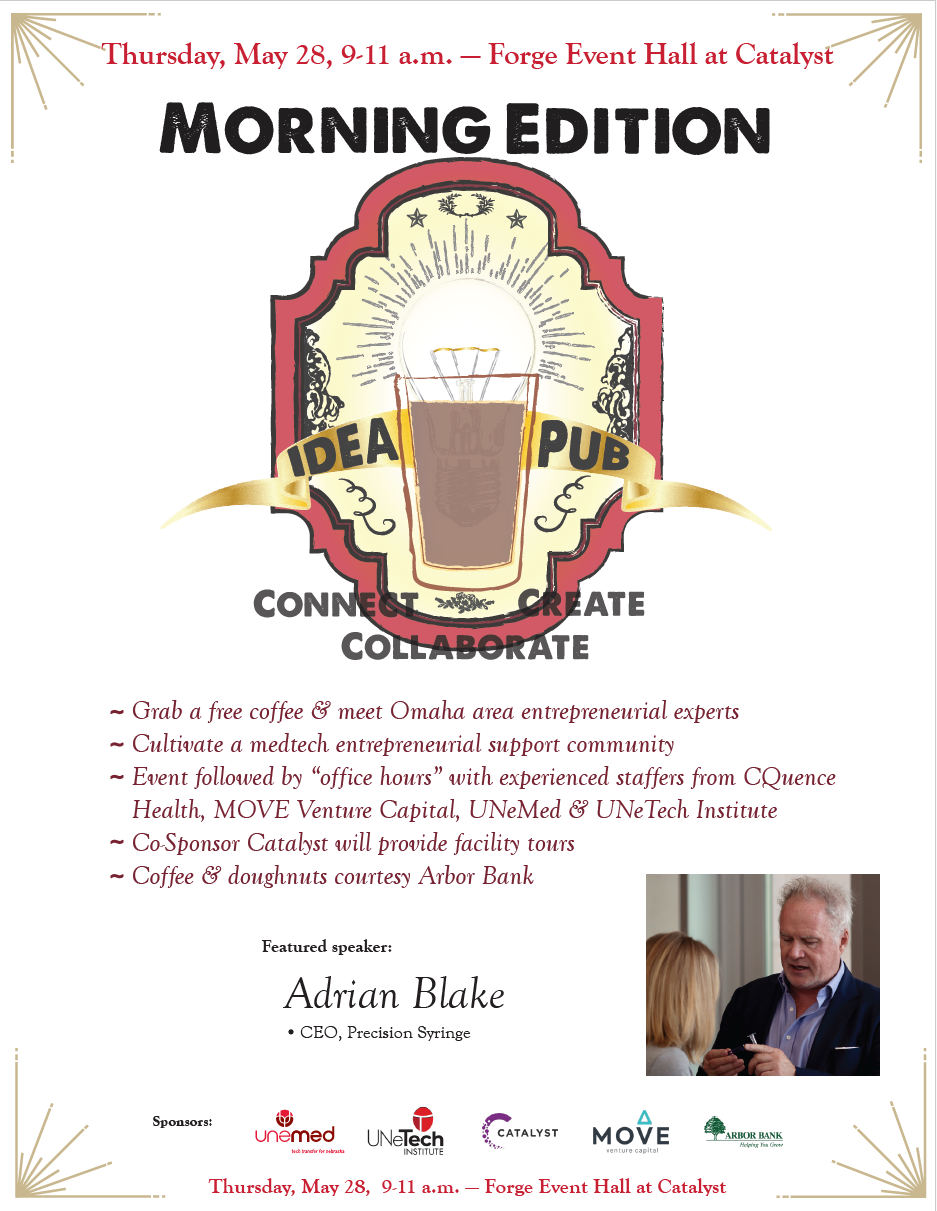
Poster for May 28, 2026, Idea Pub: Morning EditionBlake is expected to deliver an update on his company’s progress, which has been preparing to clear the FDA and launch a product that began as a UNMC innovation. The innovation is a one-handed syringe invented by a former pediatric ophthalmologist who wanted more precision and agility when injecting medications into his patients’ eyes.

Free refreshments will be provided courtesy Arbor Bank, and Catalyst will offer complimentary facility tours on a first-come, first-served basis.

Park Omaha manages metered parking in a structure just north of the main entrance and along 46th and 48th Streets. See map for directions and more details.

UNeMed, the technology transfer and commercialization office for UNMC and UNO, created Morning Edition to help University innovators and entrepreneurs connect and collaborate with colleagues and experts from the venture capital and startup communities.

Morning Edition regularly features “Office Hours” with UNeMed staff, co-sponsor UNeTech Institute, CQuence Health, and MOVE Venture Capital. Office Hours creates the opportunity for faculty, students and staff to have one-on-one time with UNeMed, UNeTech, CQuence or MOVE professionals to discuss new technologies or startup potential.

UNeTech is the University of Nebraska’s startup incubator, supporting entrepreneurial efforts built on innovations created by University personnel. CQuence is a local venture organization focused on healthcare-related startups. MOVE is a pre-seed and seed venture capital firm focused on investing in Nebraska technology startup companies.

Morning Edition is typically held on the final Thursday of every month and will continue to feature guest speakers from the University’s stable of successful and budding startup companies and from Omaha’s entrepreneurial ecosystem. The event will provide UNMC and UNO innovators an opportunity to build new partnerships and allies that can help develop their innovative ideas and discoveries into products that help people.

A tentative list of upcoming Morning Editions include:

  • June 25: Andrew Rogers, CEO, Docology
  • July 30: Jon Rhoades, CEO, Valid
  • Aug 27: Jonell Tempero, Managing Dir, US Operations, RespirAI
  • Sept 24: Jenilee Woltman, MS Ed, CEO, Mission Accomplished
  • Oct 29: Riley Reynolds, MS, CEO, Rheam Medical
  • Nov 19: Stephen Gliske, PhD, Co-Founder, NeuroServ
  • Dec 17: Jessica Queen, RN, CEO, Omedus

The event is free and open to all, and complimentary refreshments will be provided as long as supplies last.

Morning Edition is part of UNeMed’s “Idea Pub,” a suite of entrepreneurial networking events that include “Innovations & Libations” and “Startup Showcase.”

Read article

Applications now open for 2026 Tech Transfer Boot Camp

Comments (0) News

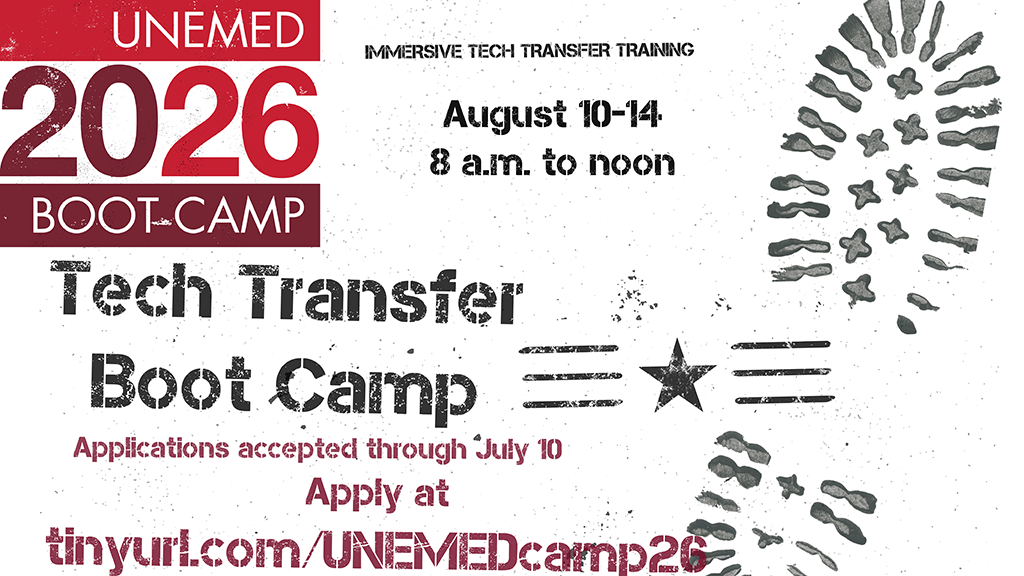
OMAHA, Nebraska (May 14, 2026)—The annual Technology Transfer Boot Camp will be held Aug. 10-14, UNeMed announced today.

The Technology Transfer Boot Camp is aimed at scientists and students interested in the process of commercializing an academic innovation or discovery. The week-long series of seminars and hands-on training can help jump-start an alternate career in science as a technology transfer professional.

The program helps scientists gain a wide range of skills and experience to match their scientific knowledge and training.

The Boot Camp focuses on several key areas relevant to a successful career in technology transfer, including:
  • Invention evaluation
  • Intellectual property law
  • Marketing and commercialization
  • Contract negotiation

UNeMed’s 2026 Technology Transfer Boot Camp will dive deeper than simple lectures. Topics will be explored with hands-on activities meant to teach new skills and abilities.

Anyone within the University of Nebraska system is encouraged to apply and participate free of charge, but space is limited. All sessions will be held at UNeMed in the new Catalyst building, on the west side of Saddle Creek Road.

Applications are open through July 10, and will be reviewed in the order they are received until all spaces are filled.

To apply, follow this link: https://docs.google.com/forms/d/e/1FAIpQLSf5j7HSF6qfRnqS6VUlp1L5QvrcXIM1asPq36fxlnGp1mkrAQ/viewform?usp=sf_link.

More information about the application process and requirements can be found at https://www.unemed.com/about-us/join-our-team#bootcamp.

Read article

Morning Edition shines light on early-stage Nebraska techs, startups

Comments (0) News

UNeMed Business Development Manager and Morning Edition organizer Tyler Scherr, PhD, addresses the gathering during brief welcoming remarks at the April 30, 2026, installment of Idea Pub: Morning Edition in the Forge Event Hall at Catalyst Omaha in the Edge District.

UNeMed Business Development Manager and Morning Edition organizer Tyler Scherr, PhD, addresses the gathering during brief welcoming remarks at the April 30, 2026, installment of Idea Pub: Morning Edition in the Forge Event Hall at Catalyst Omaha in the Edge District.

OMAHA, Nebraska (April 30, 2026)—Idea Pub: Morning Edition underwent a temporary program shift today, delivering a full slate of early-stage Nebraska startups, including a handful that have reached the midpoint of the Steel Works Health Accelerator program.

For the first time, the networking event was held in the afternoon and provided space and audience for five health-related startups, all of which are built around University of Nebraska inventions.

“It should be obvious—hopefully obvious to everyone in this room, at least—that the University drives innovation,” event organizer and UNeMed Business Development Manager, Tyler Scherr, PhD, said during opening remarks.

What soon followed was an array of five early-stage Nebraska startup companies built around home-grown novel solutions. They included more effective diagnostic platforms and devices, better-training for cariologists, more streamlined medical prescription processes, and a potentially significant improvement to surgical safety.

Three members of the Steel Works Health Accelerator’s inaugural cohort—Aprendo Cardiovascular Solutions, Deep Health Diagnostics and BreezeMed—were among the five who delivered 10-minute presentations. (Steel Works is a three-month program that trains, supports and mentors early-stage startup companies built around emerging University of Nebraska innovations.)

RespirAI and Rheam Medical also delivered updates about their companies.

Ed O'Leary, MD, an interventional cardiologist and CEO of Aprendo Cardiovascular Solutions, discusses his innovative approach to training better cardiologists during his presentation at the April 30, 2026, installment of Idea Pub: Morning Edition in the Forge Event Hall at Catalyst Omaha in the Edge District.

Ed O’Leary, MD, an interventional cardiologist and CEO of Aprendo Cardiovascular Solutions, discusses his innovative approach to training better cardiologists during his presentation at the April 30, 2026, installment of Idea Pub: Morning Edition in the Forge Event Hall at Catalyst Omaha in the Edge District.

Aprendo, founded by interventional cardiologist Ed O’Leary, MD, is building a better way to teach the intricacies of navigating a catheter to and around a patient’s heart.

“They struggle to learn this,” he said. “It’s a very complex thing to learn because they’re using a two-dimensional image of a three-dimensional object.”

Dr. O’Leary said his solution helps render the heart and its complex of twisting arteries and veins into a three-dimensional model that speeds the training process. At the same time, it also makes the training more effective by using proven concepts often found in video games.

Deep Health Diagnostics, led by ophthalmologists Ron Krueger, MD, and Ashok Puri, MBBS, is working on a software package that leverages the power of AI. Their diagnostic system promises to standardize the diagnosis of the world’s leading case of vision loss, macular edema. Current approaches are too often subject to a doctor’s interpretation and then treated in a one-size-fits-all approach.

Deep Health Diagnostics’ platform could help clinical providers use more objective data for more specific—and earlier—diagnoses. Such an early and specific diagnosis could then help a doctor tailor a treatment program that could dramatically improve a patient’s long-term vision health.

UNMC psychologist Stephen Salzbrenner, MD, opened his presentation for BreezMed with a powerful story about a patient going through a life-threatening mental crisis. After prescribing the patient with potentially life-saving medication, he learned too late the patient’s insurance provider ultimately denied the prescription at the pharmacy for lack of “prior authorization.” Dr. Salzbrenner said he never saw the patient again and still doesn’t know what became of them.

He vowed to do all he could to make certain that wouldn’t happen again. He founded BreezMed, a software solution that helps clinicians and patients avoid the hurdles and roadblocks associated with health insurance and their prior authorization denials.

RespirAI’s Managing Director for U.S. Operations, Jonell Tempero, presented her company’s approach to reducing the deadly effects of chronic obstructive pulmonary disease or COPD. The fifth leading cause of death in the U.S., lower raspatory diseases are most dangerous during a sudden flare up of symptoms called an exacerbation.

Predicting those flare ups have been impossible until a logarithm developed by RespirAI empowers wearable devices—such as a sticky patch about the size of a playing card or even a smartwatch—with the ability to seek treatment several hours, or even days, before the flare-up begins.

Rheam Medical’s CEO and founder Riley Reynolds closed out the presentations. Based in Lincoln, Rheam is building a surgical device aimed at preventing a common complication associated with minimally invasive surgery in the lower abdomen.

The first step involves the surgeon piercing the patient’s skin, muscle and tissue to insert a device called a trocar. The trocar serves as a portal through which the surgeon can safely insert various tools, cameras and other instruments. The problem, Reynolds said, is that about 170 patients each day suffer from complications resulting from a surgeon inadvertently puncturing an organ during this initial step.

Riley Reynolds, CEO and founder of Rheam Medical, explain how his company plans to improve minimally invasive procedures during his presentation at the networking event, Idea Pub: Morning Edition, held in the Forge Event Hall at Catalyst Omaha in the Edge District on April 30, 2026.

Riley Reynolds, CEO and founder of Rheam Medical, explains how his company plans to improve minimally invasive procedures during his presentation at the networking event, Idea Pub: Morning Edition, held in the Forge Event Hall at Catalyst Omaha in the Edge District on April 30, 2026.

Reynolds, a mechanical engineer, said Rheam’s device and trocar system all but removes that complication as a possibility.

Morning Edition is UNeMed’s and UNeTech Institute’s networking event for university innovators, entrepreneurs and startup community members. Catalyst Omaha co-sponsors the event and provides free tours of the spacious facility.

Additional sponsors include biomedical investment and mentoring firm CQuence Health and Arbor Bank, which provides coffee and doughnuts to guests.

Morning Edition will continue to be a fixture in the Forge Event Hall, located on the north end of Catalyst Omaha in the Edge District. Guided tours, coffee and doughnuts will also continue as added features.

The next Idea Pub: Morning Edition will be held Thursday, May 28, 2026, at 9 a.m. The featured speaker is expected to be Adrian Blake, CEO at Precision Syringe, a startup built on an innovative design created at UNMC.

Read article

Steel Works Health Accelerator headlines next Idea Pub

Comments (0) News


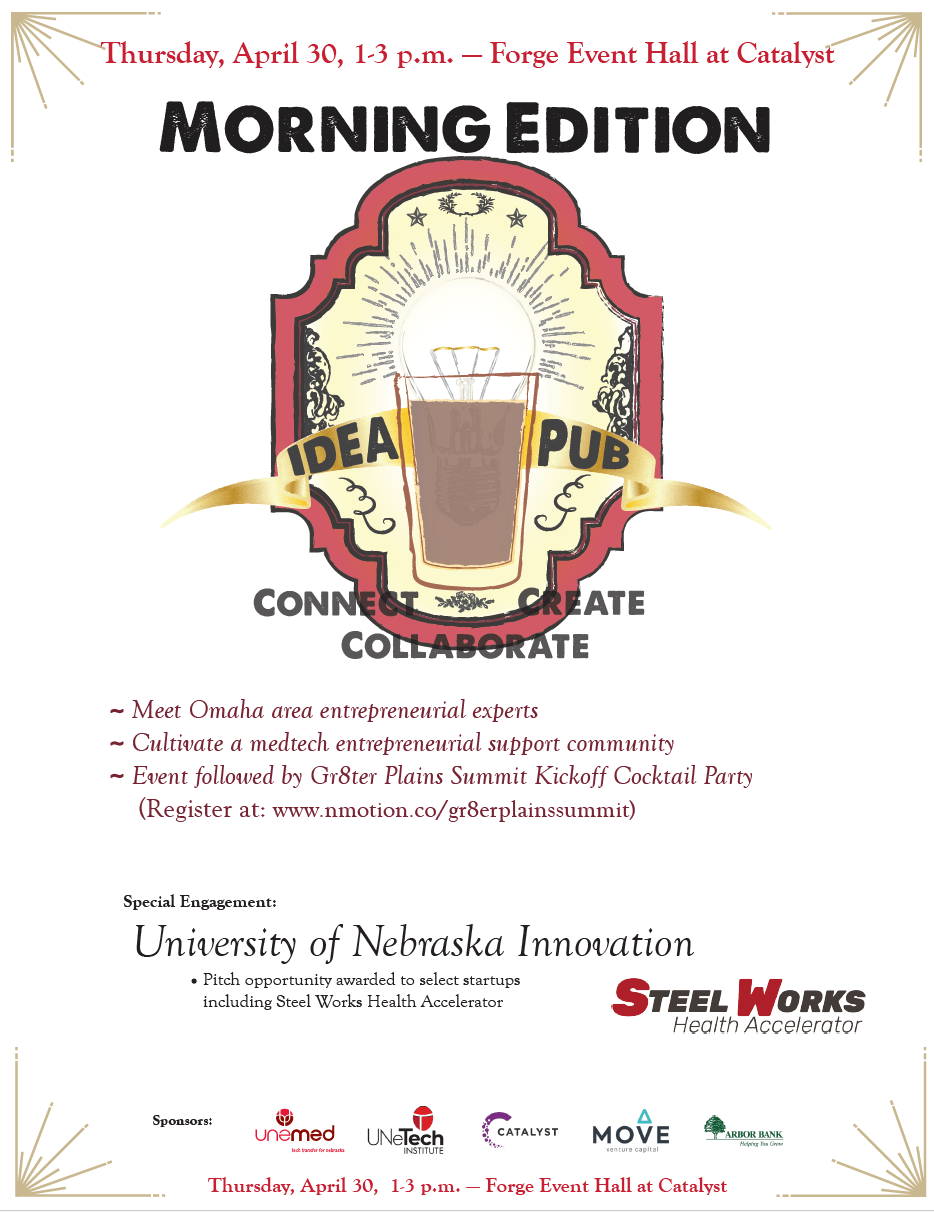
OMAHA, Nebraska (April 28, 2026)—In a break from tradition, the next Idea Pub: Morning Edition will shift to a Startup Showcase format and move to an afternoon showing for its next event on Thursday.

Starting at 1 p.m. in the Forge Event Hall of the Edge District’s Catalyst building, Idea Pub will showcase five startups from the first cohort of the Steel Works Health Accelerator. It is also listed among the “pre-summit” activities for the upcoming Gr8er Plains Summit.

Idea Pub will open with brief remarks highlighting university innovations from co-sponsors UNeMed and UNeTech, who also collaborated to build the Steel Works Health Accelerator.

Steel Works Health Accelerator LogoSteel Works is focused on helping early-stage startups and founders working with “healthtech” innovations from the University and the greater Nebraska community. In collaboration with the health venture company CQuence Health, Steel Works mentors and advises a small cohort of startups as they work to build their investor networks, business models and company messaging.
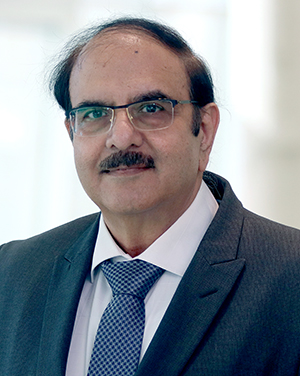
As Steel Works passes the midpoint with its first cohort, five companies will present improved pitches and provide updates on their progress.

Those startups, in presentation order, are:

  • Aprendo Cardiovascular Solutions (Ed O’Leary, MD, CEO)
  • Deep Health Diagnostics (Ron Krueger, MD, CEO)
  • BreezMed (Chris Henkenius, CEO)
  • RespirAI (Jonell Tempero, Managing Director, US Operations)
  • Rheam Medical (Riley Reynolds, CEO)

Startup presentations are expected to begin at about 1:20 p.m. Each will run about 10 minutes, with another 5 minutes allotted for Q&A. The event will wrap up at about 2:45 p.m.

Poster for April 30, 2026, Idea Pub: Morning EditionCatalyst, a co-sponsor of the event, will offer complimentary facility tours on a first-come, first-served basis.

Park Omaha manages metered parking in a structure just north of the main entrance and along 46th and 48th Streets. See map for directions and more details.

UNeMed, the technology transfer and commercialization office for UNMC and UNO, created Morning Edition to help University innovators and entrepreneurs connect and collaborate with colleagues and experts from the venture capital and startup communities.

Morning Edition regularly features “Office Hours” with UNeMed staff, co-sponsor UNeTech Institute, CQuence Health, and MOVE Venture Capital. Office Hours creates the opportunity for faculty, students and staff to have one-on-one time with UNeMed, UNeTech, CQuence or MOVE professionals to discuss new technologies or startup potential.

UNeTech is the University of Nebraska’s startup incubator, supporting entrepreneurial efforts built on innovations created by University personnel. CQuence is a local venture organization focused on healthcare-related startups. MOVE is a pre-seed and seed venture capital firm focused on investing in Nebraska technology startup companies.

Morning Edition is typically held on the final Thursday of every month and will continue to feature guest speakers from the University’s stable of successful and budding startup companies and from Omaha’s entrepreneurial ecosystem. The event will provide UNMC and UNO innovators an opportunity to build new partnerships and allies that can help develop their innovative ideas and discoveries into products that help people.

A tentative list of upcoming Morning Editions include:

  • May 28: Adrian Blake, CEO, Precision Syringe
  • June 25: Andrew Rogers, CEO, Docology
  • July 30: Jon Rhoades, CEO, Valid
  • Aug 27: Jonell Tempero, Managing Dir, US Operations, RespirAI
  • Sept 24: Jenilee Woltman, MS Ed, CEO, Mission Accomplished
  • Oct 29: Riley Reynolds, MS, CEO, Rheam Medical
  • Nov 19: Stephen Gliske, PhD, Co-Founder, NeuroServ
  • Dec 17: Jessica Queen, RN, CEO, Omedus

The event is free and open to all, and complimentary refreshments will be provided as long as supplies last.

Morning Edition is part of UNeMed’s “Idea Pub,” a suite of entrepreneurial networking events that includes “Innovations & Libations” and “Startup Showcase.”

Read article

Cross-campus disease monitoring platform wins Napkin contest 

Comments (0) News

Ashok Puri, MBBS, MSAssistant Professor, Department of Ophthalmology and Visual Sciences & Center of Intelligent Healthcare, University of Nebraska Medical Center

Dr. Puri

OMAHA, Nebraska (April 8, 2026) — A software platform that grades and monitors retinal diseases won the top prize of UNeMed’s 2026 Back-o-the-Napkin Contest, officials announced today. 

Selected from a total of 20 entries, the winning idea was a cross-campus collaboration between UNMC’s Ron Krueger, MD, and Ashok Puri, MBBS, and UNL’s team of Ashok Samal, PhD, and Sanyam Agarwal. Their inventive approach would optimize diagnosing and monitoring retinal diseases while offering optimal treatment strategies for improved patient outcomes. As the winning entry, the project will receive additional developmental support and guidance. 

Ronald Krueger, M.D.

Dr. Krueger

Contest entries were judged on the following criteria: patentability, feasibility and market size. Eligible inventions included artificial intelligence programs or systems, software tools and applications, medical devices and research tools. All entries for the contest were also evaluated for their novelty and commercial potential. Even though only one entry could be selected for the prize, several other submissions are expected to move forward with additional testing or research. 

Our gobs are smacked after receiving the highest number of contest entries to date,” UNeMed senior licensing specialist and contest director Amanda Hawley, PhD, said. “The submissions reflect the ingenuity and the innovative mindset of the University of Nebraska System at work.” 

There were a record-high 20 entries, representing 18 departments and three campuses. UNMC fielded entries from the Colleges of Medicine, Allied Health, and Munroe Meyer. UNO was represented by the Colleges of Education, Information Systems and Quantitative Analysis and Information Science and Technology, and the National Counterterrorism Innovation, Technology, and Education Center. The invention from UNL was from the College of Engineering.  Four of the total submissions were the result of inter-campus collaborations between UNMC, UNO and UNL. 

“It is wonderful to witness fruitful collaborations amongst our University of Nebraska clinicians and researchers,” Dr. Hawley said. “It truly takes a village to move innovations forward. Expanding our inter-campus connections, expertise and resources can only bolster the commercial potential for university inventions.” 

On average, UNeMed, the technology transfer and commercialization office for UNMC and UNO, will process about 100 new inventions every year from faculty, staff and students. The nature of inventions varies widely, ranging from software solutions and novel therapies to research tools and medical devices. 

“The advancement of many inventions stall out simply from a lack of resources,” Dr. Hawley said. “The support from the contest can bring in experts and skilled developers to give a much-needed boost to help make these inventions a reality and move to the next phase of development. And without it, these impactful innovations would fade into obscurity, never knowing their true potential.” 

The winning invention was titled, “A Retinal Disease Monitoring Platform and a Clinically Aligned Evaluation Metric for Retinal Lesion Segmentation.” 

UNeMed and the UNMC Great Plains IDeA-CTR co-sponsored the contest. 

Read article

Nebraska lands 57th on national list of U.S. Patents

Comments (0) News

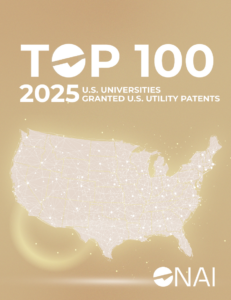
The cover page of the National Academy of Inventors' 2025 list of top 100 American institutions to secure a U.S. Patent. The University of Nebraska system landed No. 57 among the National Academy of Inventors’ national list of American universities to have secured United States patents during the 2025 calendar year.
Of the 39 University of Nebraska patents, 22 are connected to UNMC, 15 of which have been licensed for further development and research.

Among UNMC’s 2025 U.S. patents are a pair issued to Jingwei Xie, PhD, in the Department of Surgery and the Mary & Dick Holland Regenerative Medicine Program. Dr. Xie’s growing body of work now includes 10 issued patents with another 18 pending. All are related to his ground-breaking work in producing next-generation materials and methods for wound healing, tissue growth, drug delivery and sample collection, among others.

A UNMC Distinguished Scientists in 2020 and the 2019 Harold M. Mauer Scientific Achievement Award winner in 2019, Dr. Xie is among UNMC’s most prolific innovators. He has submitted 40 new inventions to UNeMed and was the tech transfer office’s Innovator of the Year at UNeMed’s 2024 Innovation Awards.

Additional patents issued to UNMC innovators include a joint patent issued to researchers Howard Gendelman, MD, and Benson Edagwa, PhD, for their work on a nanoformulation related to their work on improving HIV treatments.

Tammy Kielian, PhD, and Hani Haider, PhD, also secured two patents apiece. Dr. Kielian’s work includes a novel approach to a rare disease afflicting children and an unrelated collaborative project with Bin Duan, PhD, that established a new way to build antimicrobial structures. Dr. Haider’s patents are a corrective foot brace and a tracking system related to computer assisted surgery.

Other UNMC patents include a new surgical graft from Jason MacTaggart, MD; a novel radiopharmaceutical from Jered Garrison, PhD; and new CAR T-cells from Hamid Band, MD, PhD, and Vimla Band, PhD.

Despite UNMC’s strong portfolio of novel innovations, this is the first year Nebraska has dropped from the international list of top 100 of institutions since 2017 when it first cracked the list at No.70. Last year, Nebraska secured 49 U.S. patents to land at No. 82 on the global list.

Nebraska apparently just missed the current top international 100, which ended in a tie at No. 98 with four institutions at 40 patents apiece. Presumably, Nebraska’s 39 pushed it to No. 102 in the world, one short of a ninth-straight year in the top 100.

Read article

Milk could key next-generation treatments for AD, PD

Comments (0) News

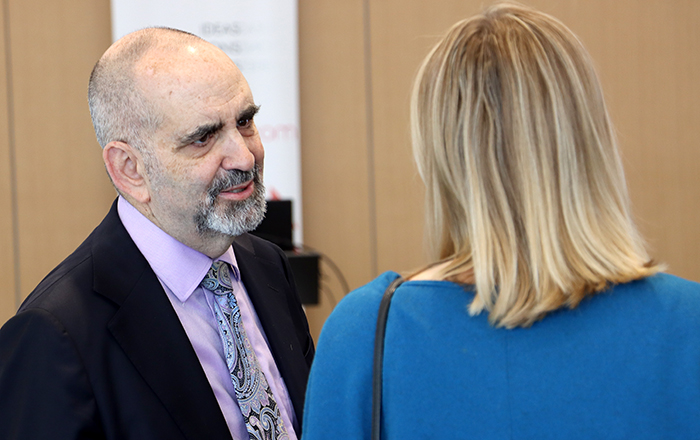
At the March 26, 2026, Morning Edition event at Catalyst Omaha, Howard Gendelman, MD—Chair of UNMC’s Department of Pharmacology and Experimental Neuroscience and Chief Science Officer at his startup, NeuralRegen—chats with a guest following his short presentation about the innovative therapies he and his company are developing for treating neurodegenerative diseases.

At the March 26, 2026, Morning Edition event at Catalyst Omaha, Howard Gendelman, MD—Chair of UNMC’s Department of Pharmacology and Experimental Neuroscience and Chief Science Officer at his startup, NeuralRegen—chats with a guest following his short presentation about the innovative therapies he and his company are developing for treating neurodegenerative diseases.

OMAHA, Nebraska (March 26, 2026)—Howard Gendelman, MD, one of UNMC’s most prolific innovators, led Thursday’s installment of Idea Pub: Morning Editon with a short presentation about his new startup NeuralRegen.

Dr. Gendelman explained how NeuralRegen is developing more powerful therapies for neurodegenerative diseases like Alzheimer’s and Parkinson’s Disease. Their innovative approach aims to harness the natural healing and growth power found in nutrient-dense colostrum, the first milk produced in the mammary glands after giving birth. NeuralRegen has partnered with Oehlerking Dairy Farm in Elmwood, Nebraska, to provide the colostrum needed to develop the promising new technology.

Current treatments for Alzheimer’s or Parkinson’s do little more than relieve symptoms while the underlying disease continues to progress, Dr. Gendelman said.

“We want to treat the disease. I can’t say cure the disease, but we can ameliorate it,” said Dr. Gendelman, Chair of UNMC’s Department of Pharmacology and Experimental Neuroscience.

“We want to move from the symptom-side approach to an ameliorative-side approach,” he added, noting that clinical testing could begin in 3-5 years, if all goes well.

Morning Edition is UNeMed’s and UNeTech Institute’s networking event for university innovators, entrepreneurs and startup community members. Catalyst Omaha co-sponsors the event and provides free tours of the spacious facility.

Additional sponsors include biomedical investment and mentoring firm CQuence Health and Arbor Bank, which provides coffee and doughnuts to guests.

Morning Edition will continue to be a fixture in the Forge Event Hall, located on the north end of Catalyst Omaha in the Edge District. Guided tours, coffee and doughnuts will also continue as added features.

In a temporary break from tradition, the next Idea Pub: Morning Edition will be held in the afternoon on Thursday, April 30, 2026, at 1 p.m. The featured speaker has not yet been announced.

Read article

Carecubes enters market, closes $6.5 million round

Comments (0) News

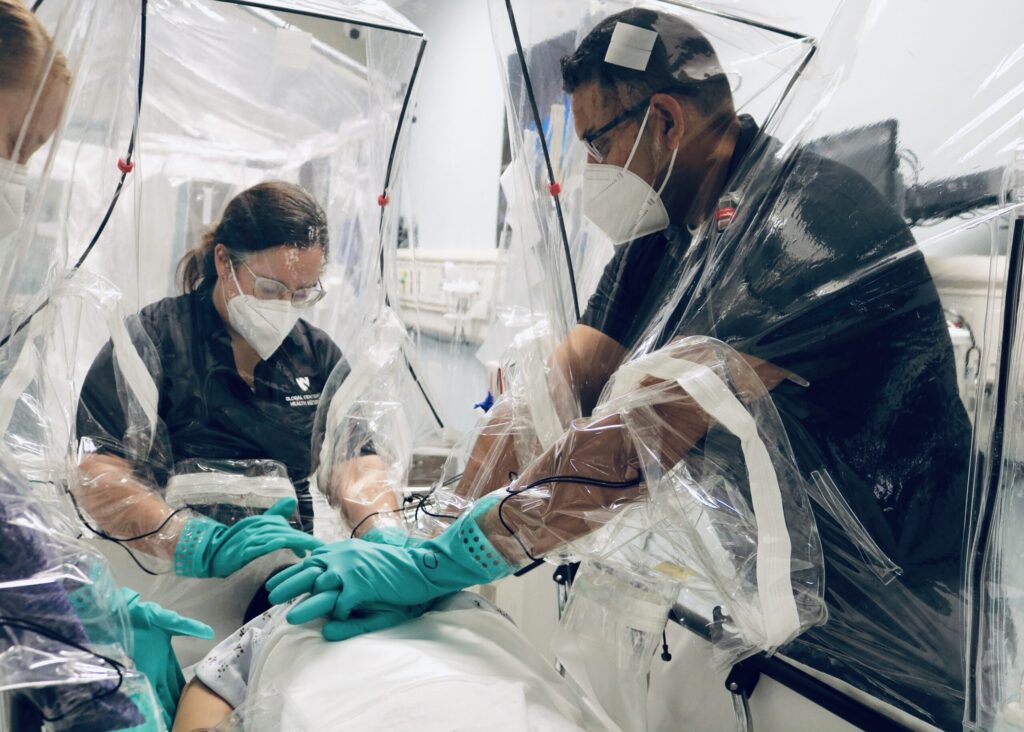
Clinical staff at UNMC/Nebraska Medicine perform life-saving procedures during a medical simulation using an early prototype of the Carecubes isolation unit.

Clinical staff at UNMC/Nebraska Medicine perform life-saving procedures during a medical simulation using an early prototype of the Carecubes isolation unit.

OMAHA, Nebraska (March 31, 2026)—The last several months have been a whirlwind for a device developed at UNMC’s world-class infectious diseases division.

Carcubes quietly launched its innovative product in several U.S. hospitals in 2025, and was prominently featured an October episode of NBC’s hit medical drama, Chicago Med. More recently, Carecubes announced a successful $6.5 million Series A funding round.

The product’s commercial growth and notoriety represent a major milestone for a life-saving device more than 10 years in the making.

Originally developed in response to the 2014 Ebola outbreak in Sierra Leone, today’s Carecube is a transportable and easily assembled mobile isolation unit for patients suffering from contagious diseases. In wrapping the patient in protective gear, the Carecube saves healthcare workers time and energy when donning or doffing personal protective equipment during an outbreak.

“I’ve been in our emergency room, assessing suspect patients or potential patients, possibly with high consequence infectious diseases and wished we had this device available,” said James Lawler, the Associate Director for International Program and Innovation at UNMC’s Global Center for Health Security and the Deputy Director of the Nebraska Biocontainment Unit.

Lawler, in effect, granted his own wish, as he and his team of world renown infectious disease experts from UNMC helped develop the isolation unit, including Mara Jana Broadhurst, MD, PhD; David Brett-Major, MD; and Chris Kratochvil, MD.

Now he and virtually any other clinical facility on the planet have access to a far better and simpler way to protect patients, providers and the communities they serve from infectious diseases—and perhaps even more readily contain future outbreaks.

UNMC’s infectious disease bona fides gained wide notoriety during the 2014 Ebola outbreak. Three patients were medically evacuated to UNMC’s biocontainment unit during what was the worst Ebola outbreak in history.

The hemorrhagic fever swept through Sierra Leone and five other African countries before landing in Europe and even the United States. More than 28,600 people in 10 countries were infected, leading to 11,325 deaths, 221 of which were healthcare workers.

As the pandemic raged in Sierra Leone, the U.S. Department of Defense’s advanced research projects agency, or DARPA, initiated a new program in response. The goal of the P3 Program was to accelerate the innovation and development process for tools and solutions that might help fight or prevent infectious disease outbreaks.

Otherlab, an independent research and development firm in San Francisco, answered the call and started work on a novel solution. The idea, first put forward by Otherlab founder, Saul Griffith, was to wrap the patient in PPE rather than the clinical workers.

That idea became the ISTARI device, or the Isolation System for Treatment and Agile Response for High-Risk Infections. It was the earliest version of today’s Carecube.

Once the Ebola pandemic ended, despite its promise and potential, Griffith’s idea landed on a dusty shelf, seemingly forgotten.

Several years later, in 2018—as Lawler and so many others fought a new Ebola outbreak, this time in the Democratic Republic of the Congo—he recalled Griffith’s innovative idea.

In the small world of the infectious disease community, Lawler knew some of the people that worked on the ISTARI project. He made a few calls.

“They connected me to Saul,” Lawler said. “I always had that project in the back of my mind, and how we might reinvent the wheel for the Congo outbreak.”

As the regional Ebola outbreak continued, the rising threat of a novel coronavirus added urgency to the revived ISTARI project.

The COVID-19 pandemic exposed unexpected vulnerabilities in the supply chain. Things like masks, gloves, swabs and other important protective gear clinical workers needed in testing and treating COVID patients were soon in short supply or just unavailable.

Suddenly, Carecubes’ approach—wrapping the patient in protective gear and potentially turning any hospital room in an isolation unit—attracted wide and robust interest.

By early 2020, the Otherlab-UNMC collaboration created a startup company around the device. Griffith called his friend, Alex Laskey, to act as CEO.

In April 2020 Laskey’s brother, a clinical psychiatrist, was primarily treating fellow clinicians suffering from PTSD caused by conditions the pandemic created.

“I thought to myself in April 2020, watching nurses and doctors being treated as disposable commodities, ‘Who am I to say no,’” he said.

Five years later, Carecubes has an FDA-approved device and is actively marketing their products.

“I’m really proud of the device we created, and I’m excited to see it help people,” Lawler said. “It’s been a great collaboration process. I think everybody can point to a feature that was their idea…And some are like, ‘Why hasn’t that been done before?’ Just brilliant ideas.”

The Carecube cleared the FDA in early 2024 and is available in six major U.S. hospitals today. Manufactured in Minnesota, Carecube units began arriving in additional half-dozen hospitals before the end of summer in 2025.

Made to travel the globe for quick and easy deployment anywhere—whether a small clinic in rural Nebraska or an improvised encampment in one of the most remote areas on the planet—the value of the Carecube device is not limited to notoriously exotic diseases like Ebola.

Isolating measle patients or cases of drug-resistant tuberculosis are but two examples where isolation capability would be necessary at a remote facility not typically equipped to handle highly infectious diseases.

A recent study showed that just 2.4 percent of hospitals—and zero senior nursing homes—have airborne infection isolation rooms.

“We are incredibly proud of our entire team,” Lawler said, “which has been instrumental in getting these devices to this point and continues to validate UNMC’s standing as one of the world’s leading institutions for managing high consequence infectious diseases.”

Read article

Gendelman to lead next Idea Pub: Morning Edition

Comments (0) News

OMAHA, Nebraska (March 9, 2026)—Prolific UNMC innovator Howard Gendelman, MD, will be the featured speaker at the next Idea Pub: Morning Edition, on Thursday, March 26, at 9 a.m. in the Forge Event Hall of the Edge District’s Catalyst building.

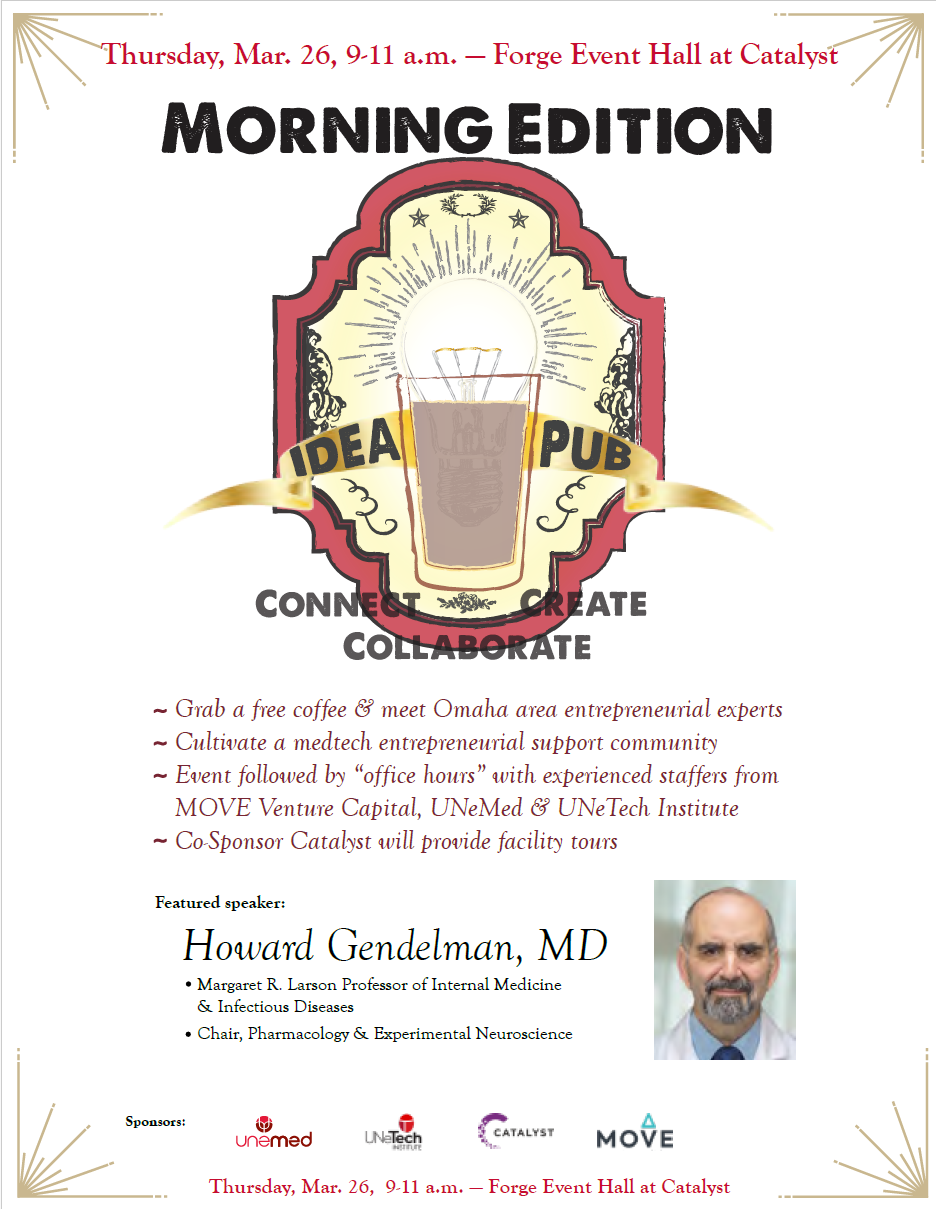
Poster for March 26, 2026, Idea Pub: Morning EditionDr. Gendelman 0f the Chair of UNMC’s Department of Pharmacology and Experimental Neuroscience. He is expected to discuss his new startup company, NeuralRegen, and its prospects for treating neurodegenerative diseases such as Alzheimer’s disease and Parkinson’s disease.

Free coffee will be provided, and Catalyst, a co-sponsor of the event, will offer complimentary facility tours on a first-come, first-served basis.

Park Omaha manages metered parking in a structure just north of the main entrance and along 46th and 48th Streets. See map for directions and more details.

UNeMed, the technology transfer and commercialization office for UNMC and UNO, created Morning Edition to help University innovators and entrepreneurs connect and collaborate with colleagues and experts from the venture capital and startup communities.

Morning Edition will also regularly feature “Office Hours” with UNeMed staff, co-sponsor UNeTech Institute, CQuence Health, and MOVE Venture Capital. Office Hours creates the opportunity for faculty, students and staff to have one-on-one time with UNeMed, UNeTech, CQuence or MOVE professionals to discuss new technologies or startup potential.

UNeTech is the University of Nebraska’s startup incubator, supporting entrepreneurial efforts built on innovations created by University personnel. CQuence is a local venture organization focused on healthcare-related startups. MOVE is a pre-seed and seed venture capital firm focused on investing in Nebraska technology startup companies.

Morning Edition is typically held on the final Thursday of every month and will continue to feature guest speakers from the University’s stable of successful and budding startup companies and from Omaha’s entrepreneurial ecosystem. The event will provide UNMC and UNO innovators an opportunity to build new partnerships and allies that can help develop their innovative ideas and discoveries into products that help people.

A tentative list of upcoming Morning Editions include:

  • March 26: Howard Gendelman, MD, NeuralRegen
  • April 30: TBD (2 p.m.)
  • May 28: Adrian Blake, CEO, Precision Syringe
  • June 25: Andrew Rogers, CEO, Docology
  • July 30: Jon Rhoades, CEO, Valid
  • Aug 27: Jonell Tempero, Managing Dir, US Operations, RespirAI
  • Sept 24: Jenilee Woltman, MS Ed, CEO, Mission Accomplished
  • Oct 29: Riley Reynolds, MS, CEO, Rheam Medical
  • Nov 19: Stephen Gliske, PhD, Co-Founder, NeuroServ
  • Dec 17: Jessica Queen, RN, CEO, Omedus

The event is free and open to all, and complimentary coffee will be provided as long as supplies last.

Morning Edition is part of UNeMed’s “Idea Pub,” a suite of entrepreneurial networking events that includes “Innovations & Libations” and “Startup Showcase.”

Read article

First Steel Works Health Accelerator cohort announced

Comments (0) News

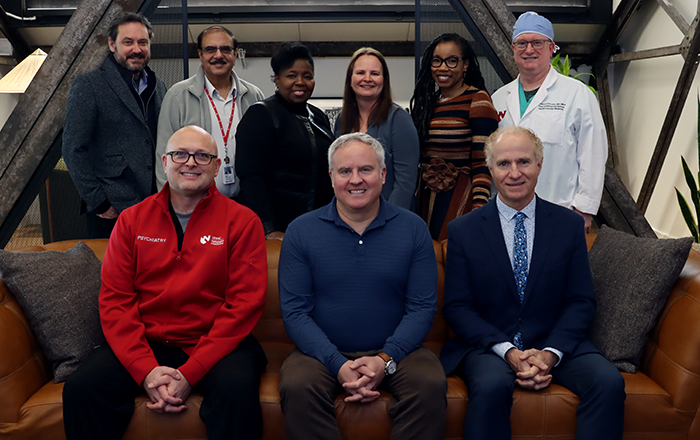
The first cohort of the 2026 Steel Works Health Accelerator are (front, left to right) Steve Salzbrenner, Tim Crane, Ronald Krueger, (back) Kirk Zeller, Ashok Puri, Shiela Fields, Beth Beam, Marcia Shade, Ed O'Leary. Not Pictured: Chris Henkenius.

The first cohort of the 2026 Steel Works Health Accelerator are (front, left to right) Steve Salzbrenner, Tim Crane, Ronald Krueger, (back) Kirk Zeller, Ashok Puri, Shiela Fields, Beth Beam, Marcia Shade, Ed O’Leary. Not Pictured: Chris Henkenius.

OMAHA, Nebraska (March 4, 2026)—Six Nebraska-based startup companies and their founders have been selected to join the Steel Works Health Accelerator in its first cohort, officials announced today.

Members of the first cohort are:

  • Tim Crane & Beth Beam, RedSentrix
  • Ronald Krueger & Ashok Puri, Deep Health Diagnostics, LLC
  • Ed O’Leary, Aprendo Cardiovascular Solutions
  • Steve Salzbrenner & Chris Henkenius, BreezMed
  • Marcia Shade, Voice-IT, Inc.
  • Shiela Fields, RxNex Solutions, Inc.

Steel Works Health Accelerator logoA new position, Resident Mentor, was also created within the accelerator. That role that will be filled by Kirk Zeller, founder of GapZero NEURO Inc.

“It’s incredible to reflect on how fast this came together,” said Tyler Scherr, PhD, Managing Director and UNeMed’s Business Development Manager. “Just a few short months ago, the Steel Works Health Accelerator was only an idea on paper.”

UNeMed secured the grant funding from the U.S. Small Business Administration and built Steel Works in partnership with UNeTech Institute, the University’s startup incubator program, and CQuence Health, a local venture organization focused on healthcare-related startups.

“There’s absolutely no way we could have moved this quickly from vision to reality without the exceptional partnership and unwavering commitment from our collaborators at UNeTech Institute and CQuence Health,” Dr. Scherr said. “Their expertise, shared vision, and tireless teamwork turned what could have taken years into a matter of months.”

Steel Works is a three-month, hands-on mentoring program for early stage healthtech and medical startup companies built around emerging University of Nebraska innovations. The curriculum, developed and led by CQuence Health, will include workshops, coaching and mentoring.

Founders who complete the program are expected to emerge with a completed SBIR/STTR Grant application; a refined pitch deck and one-pager; a sound advisory and go-to-market strategy; and deeper connections within Nebraska’s entrepreneurial network.

Learn more about the Steel Works Health Accelerator at https://www.unemed.com/steel-works-health-accelerator.

Read article

Lenagh leads Idea Pub talk on industry engagement office

Comments (0) News

Agnes Lenagh, PhD, UNMC’s Director of Strategic Partnerships in the Office of Industry Engagement, chats with a guest following her remarks during the Feb. 26, 2026, Idea Pub: Morning Edition networking event at Catalyst Omaha in the Edge District.

OMAHA, Nebraska (February 27, 2026)—Thursday’s featured speaker at Idea Pub: Morning Edition talked about her leadership role within the Office of Industry Engagement: A new UNMC department so fresh it still hasn’t released an official website.

That hasn’t stopped the Director of Strategic Partnerships, Agnes Lenagh, PhD, from a whirlwind start, already laying groundwork on growing relationships with no less than 23 companies in two months on the job.

“Think of our office as the front door that bridges the university with industry,” she told the gathering during a 15-minute presentation. “And that goes both ways.”

She added that the new department wasn’t looking to build simple collaborations, which she viewed as temporary or project-based. “I’m trying to build something deeper,” she said.

UNeMed president at CEO Michael Dixon, PhD, introduced Dr. Lenagh to Morning Edition’s mixed crowd of university researchers and members of the local entrepreneurial community.

“I’m really excited about this,” he said, “because this is the blind spot we’ve been needing to fill to help build great partnerships with the university.”

Dr. Lenagh highlighted the value that UNMC holds in scientific realms, and how all the resources of experience, expertise and equipment can be leveraged to the greater good. Deeper collaborations could mean more profound discoveries and breakthroughs in research, improved clinical outcomes and even greater success in building local startup companies and products.

“I was in industry for nine years,” she said, “and I now see we can be doing so much more than what was advertised.”

Before “coming home” to UNMC, Dr. Lenagh was in business development at Streck in 2017-2025. The 2011 UNMC grad was also part of UNeMed’s licensing team in 2012-2016.

Morning Edition is UNeMed’s and UNeTech Institute’s networking event for university innovators, entrepreneurs and startup community members. Catalyst Omaha co-sponsors the event and provides free tours of the spacious facility.

Morning Editions will continue to be a fixture in the Forge Event Hall, located on the north end of Catalyst Omaha in the Edge District. Guided tours will also continue as an added feature.

The next Morning Edition is planned for Thursday, March 26, 2026, at 9-11 a.m.

Fullscreen Mode

Read article

UNMC startup featured at Bio Nebraska

Comments (0) News

John Neubaum (center), co-founder of Omaha startup HemaGlobal, and Michael Wadman, MD (right)—Chair of UNMC’s emergency medicine department and co-inventor of RapidSmear, the startup’s foundational technology—chat with Rob Owen (far left), Executive Director of Bio Nebraska, during the March 27, 2025, Morning Edition networking event at Catalyst.

OMAHA, Nebraska (February 26, 2026)—HemaGlobal, a startup company built around an innovation developed at the University of Nebraska Medical Center, was recently tabbed as the top feature on the Bio Nebraska website.

Bio Nebraska is the state’s non-profit trade organization for the bioscience industry, helping promote and connect organizations and opportunities within the sector.

The spotlight on HemaGlobal shines on the company’s robust growth for its “flagship device,” RapidSmear. Little more than an idea in 2024, RapidSmear is now available in 21 U.S. states.

Invented by HemaGlobal co-founders and Thanh Nguyen, PhD, and Michael Wadman, MD, the RapidSmear device helps simplify a critically importance step in many diagnostic tests: Preparing a blood smear sample for microscopic examination. Done improperly, it can create bottlenecks or even life-threatening delays.

HemaGlobal reports that RapidSmear improved efficiency for already-proficient personnel  by 36 percent and gave non-experts a “massive” boost of an incredible 75 percent. Dr. Wadman, Chair of the Emergency Medicine department, and Dr. Thanh—a nurse by training and recipient of numerous innovation awards, including the 2025 President’s Excellence Award—worked with the Nebraska Medicine National Quarantine Unit to develop the RapidSmear device.

Bio Nebraska’s feature also notes:

“HemaGlobal’s rapid growth was made possible by the vital support of the Nebraska Department of Economic Development (DED). Through the Business Innovation Act, Ben Kupsa and the dedicated DED team infused HemaGlobal with the early financial support necessary to accelerate our technology and develop a sustainable manufacturing infrastructure.”

Read the entire feature at: https://www.bionebraska.org/member-spotlight-hemaglobal/.

Read article

Impower lands new CEO, signs Boomerang to lead pre-seed round

Comments (1) News

OMAHA, Nebraska (February 23, 2026)—Impower Health, Inc., a startup company built on an innovation developed at the University of Nebraska at Omaha, recently secured an undisclosed investment from Boomerang Ventures while adding a new CEO.

Boomerang Ventures, an Indiana-based investment group aimed at Midwestern companies, is a top digital and tech health fund and now leads Impower’s current pre-seed round, according to a press release issued last week.

The announcement also included the addition of Trent McCracken as the new CEO.

“Bringing on the right CEO at this stage is about preparing the company for growth,” Impower’s founder and Chief Product Officer, Doug Miller, said in the release. “Trent brings the operational leadership and decisive discipline needed to translate our technology into real-world impact, while staying true to the vision that inspired our founding.”

Miller founded Impower in 2021on the back of an innovative research project in UNO’s biomechanics department that eventually created the world’s first truly self-pacing motorized treadmill. The device, a long-sought innovation in the fitness industry, is a treadmill that matches speed with the user without any inputs other than the users rate of stride or gait. A jogger  using an Impower treadmill can slow to a walk or speed to a sprint without touching any controls. Yet the treadmill will automatically match pace, making the device much safer and ideal for rehabilitation and other clinical uses.

Impower Health represents exactly the type of category-defining innovation we look to support,” Boomerang Ventures Chief Medical Officer Eric Beier, MD, said. “Their technology sits at the intersection of rehab, fitness, and long-term mobility health, turning everyday treadmills into clinical-grade diagnostic tools.”

The release also noted that the cornerstone technology will enable clinicians to chart and track patient progress while giving them real-time feedback into their mobility and possible decline, before it can lead to injury or loss of independence.

“One of the most compelling aspects of Impower Health is the opportunity to make a tangible difference in people’s lives by restoring and preserving mobility, a core component of health and independence,” McCracken said. “The healthcare market is demanding integrated, data-driven solutions, and we are uniquely positioned to accelerate growth and convert these gait metrics into clinical intelligence.”

Read article

New proposal would tax, stifle US innovation

Comments (0) Blog

by Michael Dixon, UNeMed | February 18, 2026

There are deeply troubling discussions reportedly underway within the Department of Commerce that could upend the U.S. innovation ecosystem.

The idea would impose a direct tax on academic innovation, requiring universities to surrender up to half of all licensing revenue from technologies derived from federally funded research.

That level of government take is extraordinary.

Even without a formal proposal, the concept reveals a basic misunderstanding of how academic technology commercialization works—and why it has powered American innovation for more than 40 years. In a worst-case scenario, such a policy would drain resources from university labs and startups, undermine innovation, and weaken the nation’s long-term economic and technological competitiveness.

Before passage of the Bayh–Dole Act of 1980, federally funded inventions largely sat unused. A 1998 Government Accountability Office report found that fewer than 5 percent of the 28,000 federal patents that arose from funded research were ever licensed. Virtually none were developed into products that benefited the public. The federal system lacked the infrastructure, incentives, and flexibility needed to protect intellectual property and license it effectively.

Bayh–Dole corrected this failure by shifting responsibility for intellectual property protection, early-stage development, and commercialization to institutions closer to the research and better positioned to work nimbly with industry—universities, small businesses, and nonprofits.  While comprehensive national licensing rates are not reported, the University of Nebraska Medical Center’s experience illustrates the impact of this shift: In recent years, approximately 65 percent to 80 percent of our issued U.S. patents have been licensed, translating publicly funded research into real-world investment and use.  That is a 10-fold increase in new products and treatments and cures than in the days before Bayh–Dole.

Since 1980, the Bayh–Dole framework has transformed federally funded research from a warehouse of underused patents into a powerful engine of economic growth. Licensing university and nonprofit discoveries has generated trillions in U.S. economic output and added millions of jobs. This impact reflects thousands of products and startups built on federal research—clear evidence that the current system is delivering sustained, broad-based returns to taxpayers. That success is why The Economist famously described Bayh–Dole in its 2002 Technology Quarterly essay, “Innovation’s Golden Goose,” as “possibly the most inspired piece of legislation to be enacted in America over the past half century.”

The Bayh–Dole Act granted universities the ability to license inventions and retain revenue primarily to offset the substantial costs of patent prosecution, not to create a profit center.

A single U.S. patent can cost up to $30,000 to obtain and maintain. Major research universities typically generate approximately 10–15 patentable inventions for every $100 million in research funding, translating to over $2 million in patent-related costs for an institution such as the University of Nebraska. Peer institutions with billon-dollar research portfolios, face patent expenses that scale accordingly, often reaching into the tens of millions of dollars–money that is already going to the Government through the U.S. Patent and Trademark Office.

Adding additional taxes on innovation would be devastating.

Fewer than one in five technology transfer offices operate at a net surplus, according to the Association of University Technology Managers’ annual licensing survey. Most universities spend more on intellectual property protection, technology transfer, and gap funding than they ever recover in licensing income.

They do so because universities are mission-driven institutions committed to translating discoveries into real-world solutions.

Those solutions improve lives.

They strengthen the economy.

Imposing an “innovation tax” on licensing revenue would significantly undermine this model. It would add costs to an already expensive and risky process, much like a tariff or excise tax increases the cost of goods as they move through a supply chain. Universities would be forced to charge more for licenses simply to break even, making technologies less attractive to industry partners and startups.

Those added costs would not disappear. They would pass from universities to companies, and ultimately to consumers—slowing adoption and raising prices across the economy.

The Bayh–Dole system stands as one of the most successful public-private partnerships in U.S. history. By enabling thousands of products, countless startups, and more than 200 Bayh–Dole–enabled drugs and vaccines, it has delivered taxpayer returns that vastly exceed the pre-1980 system of dormant federal patents.

Weakening this framework through new federal revenue grabs would reduce innovation, discourage private investment, and ultimately undermine the very public interests such proposals claim to advance.

Read article

Four UNMC innovations land in Pipeline programs

Comments (0) News

UNMC surgeon, Jason Johanning, MD, inventor and founder of Automated Assessments and VITAL-IT, presents his innovative approach for determining patient frailty before surgical procedures. Dr. Johanning was recently selected for the 2026 Pipeline fellowship cohort.

KANSAS CITY, Kansas (February 16, 2026)—Eight Nebraska startups and entrepreneurs, including four related to innovations developed at the University of Nebraska Medical Center, were among Pipeline’s most recent cohorts of Fellows and Pathfinders.

“Pipeline is the premier entrepreneur support organization in the Midwest,” UNeMed President and CEO Michael Dixon, PhD, said. “The fact that our startup entrepreneurs are developing to a point where they are able to successfully compete and obtain spots in both the Pathfinder and full fellowship program is a testament to how far they have come and the quality of the entrepreneurs that we have leading our startups.”

Pipeline, an entrepreneurial support organization for nearly two decades, provides resources, mentoring and other programs for Midwestern startups and their founders. Most notable among Pipeline’s programs is the year-long Fellowship, which included UNeMed startups VITAL-IT and VisionSync among the 14 selected for the 2026 cohort.

VITAL-IT is built on an innovation created by UNMC surgeon Jason Johanning, MD. The innovation improves the process for determining the safety of surgical procedures for frail patients.

VisionSync is a strategic planning software tool that helps large, matrixed organizations set and define goals, milestones and other important success metrics. It was first developed and implemented at UNMC.

Two additional entrepreneurs working with UNMC innovations were added to Pipeline’s Pathfinders program: Go 360 Live and Rheam Medical.

Go 360 Live is a new company working with a UNMC innovation that allows for more robust consultations in healthcare settings. Rheam Medical uses a device that could improve surgical options in battlefield conditions.

The Fellowship program includes four, three-day modules about things like business modeling, financial guidance, and customer discovery. The program aims to help entrepreneurs grow their companies with the added help of expert advice from a stable of national advisers and mentors.

Pipeline’s Pathfinder program, entering its fourth year, is aimed at entrepreneurs from underserved communities, such as women, minorities or rural entrepreneurs.

Additional Nebraska startups in the 2026 Pipeline Fellowship are Docology, Empower Independence Company (Showerability), and Mission Accomplished.

Another Nebraska startup in the 2026 Pathfinder program is SheMate.

Pipeline member companies have generated more than $2.9 billion in revenue and raised more than $900 million in investments. In addition, member companies continue to create valuable companies with significant exits. In November, a Pipeline medtech founder exited their startup in a deal valued at more than $700 million.

Read article

Ware wins national tech transfer award

Comments (0) News

Mindy Ware

UNeMed paralegal Mindy Ware (right) might be most recognizable as the person handing out free T-shirts to guests during the annual Innovation Week Kick-Off event. Behind the scenes, however, she’s a tech transfer industry leader and was recognized as such by TechPipeline’s most recent Excellence in Office Operations Award.

OMAHA, Nebraska (February 9, 2026)—Mindy Ware, a paralegal at UNeMed since 2010, was selected among a national pool of nominees for the Excellence in Office Operations Award by TechPipeline.

“Mindy is a tremendous asset to UNeMed,” said Jason Nickla, JD, Vice President and Director of Intellectual Property at UNeMed, the technology transfer and commercialization office for UNMC and UNO. “I admire her ability to transform potential bureaucratic messes into streamlined processes. Her straight-to-the-issue questions during meetings are always insightful.”

Mindy WareThe honor was part of the TechPipeline Impact Awards, which recognizes the “exceptional individuals who elevate the field of technology transfer through their dedication, innovation, and expertise.” TechPipeline is one of the leading technology transfer industry organizations in the United States, providing guidance, training and best practices standards.

In presenting her the Office Operations award, Tech Pipeline correctly noted that Ware is the “lynchpin for the smooth and successful operation” of UNeMed.

“Mindy’s been at the core of many, many burdensome projects over the years that required great effort to achieve their success,” Nickla said, “and amazingly she still volunteers for new ones.”

In addition to managing and coordinating UNMC’s and UNO’s intellectual property docket, Ware also led UNeMed’s move from paper to digital records, helped develop UNeMed’s innovative data tracking system, and helped tech transfer offices everywhere with her improvements to a federal reporting program.

While the bulk of Ware’s work relates to the intellectual property that UNeMed seeks to protect University research and innovation, she might be most recognized for her volunteer roles during UNeMed’s annual Innovation Week: Handing out T-shirts during the Kick-Off event or greeting guests to the Innovation Awards.

“I immediately feel better about any project Mindy is involved in,” said UNeMed President and CEO, Michael Dixon, PhD, “because I know that’s something that will get done and done right. Honestly, it’s about time she’s getting recognition for her efforts. No one deserves this more than she does.”

Read article