
by Michael Dixon, UNeMed | February 18, 2026
There are deeply troubling discussions reportedly underway within the Department of Commerce that could upend the U.S. innovation ecosystem.
The idea would impose a direct tax on academic innovation, requiring universities to surrender up to half of all licensing revenue from technologies derived from federally funded research.
That level of government take is extraordinary.
Even without a formal proposal, the concept reveals a basic misunderstanding of how academic technology commercialization works—and why it has powered American innovation for more than 40 years. In a worst-case scenario, such a policy would drain resources from university labs and startups, undermine innovation, and weaken the nation’s long-term economic and technological competitiveness.
Before passage of the Bayh–Dole Act of 1980, federally funded inventions largely sat unused. A 1998 Government Accountability Office report found that fewer than 5 percent of the 28,000 federal patents that arose from funded research were ever licensed. Virtually none were developed into products that benefited the public. The federal system lacked the infrastructure, incentives, and flexibility needed to protect intellectual property and license it effectively.
Bayh–Dole corrected this failure by shifting responsibility for intellectual property protection, early-stage development, and commercialization to institutions closer to the research and better positioned to work nimbly with industry—universities, small businesses, and nonprofits. While comprehensive national licensing rates are not reported, the University of Nebraska Medical Center’s experience illustrates the impact of this shift: In recent years, approximately 65 percent to 80 percent of our issued U.S. patents have been licensed, translating publicly funded research into real-world investment and use. That is a 10-fold increase in new products and treatments and cures than in the days before Bayh–Dole.
Since 1980, the Bayh–Dole framework has transformed federally funded research from a warehouse of underused patents into a powerful engine of economic growth. Licensing university and nonprofit discoveries has generated trillions in U.S. economic output and added millions of jobs. This impact reflects thousands of products and startups built on federal research—clear evidence that the current system is delivering sustained, broad-based returns to taxpayers. That success is why The Economist famously described Bayh–Dole in its 2002 Technology Quarterly essay, “Innovation’s Golden Goose,” as “possibly the most inspired piece of legislation to be enacted in America over the past half century.”
The Bayh–Dole Act granted universities the ability to license inventions and retain revenue primarily to offset the substantial costs of patent prosecution, not to create a profit center.
A single U.S. patent can cost up to $30,000 to obtain and maintain. Major research universities typically generate approximately 10–15 patentable inventions for every $100 million in research funding, translating to over $2 million in patent-related costs for an institution such as the University of Nebraska. Peer institutions with billon-dollar research portfolios, face patent expenses that scale accordingly, often reaching into the tens of millions of dollars–money that is already going to the Government through the U.S. Patent and Trademark Office.
Adding additional taxes on innovation would be devastating.
Fewer than one in five technology transfer offices operate at a net surplus, according to the Association of University Technology Managers’ annual licensing survey. Most universities spend more on intellectual property protection, technology transfer, and gap funding than they ever recover in licensing income.
They do so because universities are mission-driven institutions committed to translating discoveries into real-world solutions.
Those solutions improve lives.
They strengthen the economy.
Imposing an “innovation tax” on licensing revenue would significantly undermine this model. It would add costs to an already expensive and risky process, much like a tariff or excise tax increases the cost of goods as they move through a supply chain. Universities would be forced to charge more for licenses simply to break even, making technologies less attractive to industry partners and startups.
Those added costs would not disappear. They would pass from universities to companies, and ultimately to consumers—slowing adoption and raising prices across the economy.
The Bayh–Dole system stands as one of the most successful public-private partnerships in U.S. history. By enabling thousands of products, countless startups, and more than 200 Bayh–Dole–enabled drugs and vaccines, it has delivered taxpayer returns that vastly exceed the pre-1980 system of dormant federal patents.
Weakening this framework through new federal revenue grabs would reduce innovation, discourage private investment, and ultimately undermine the very public interests such proposals claim to advance.

 The honor was part of the TechPipeline Impact Awards, which recognizes the “exceptional individuals who elevate the field of technology transfer through their dedication, innovation, and expertise.” TechPipeline is one of the leading technology transfer industry organizations in the United States, providing guidance, training and best practices standards.


 Contest submission forms can be found
 When I looked at our traffic numbers form the previous year, no single Innovation Week element led the site in views or clicks or whatever metric you choose. But four of our top 10 most visited pages, and eight of our top 20—a full 34 percent of all traffic to those pages—were dedicated to Innovation Week and its pinnacle event, the Innovation Awards. And no singular element seemed to shine above the others: news stories covering the Awards ceremony itself; announcements detailing schedule of events, PDFs of the
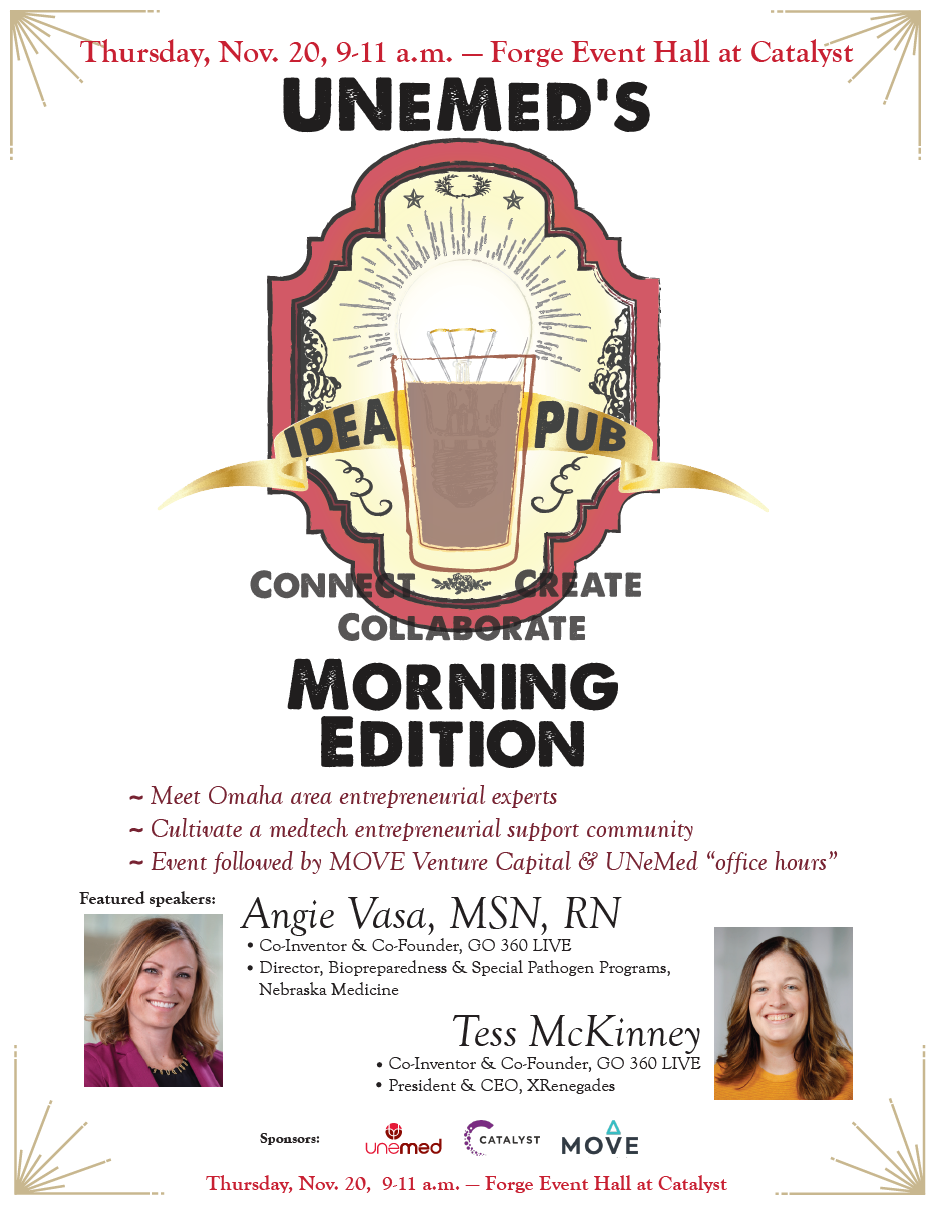
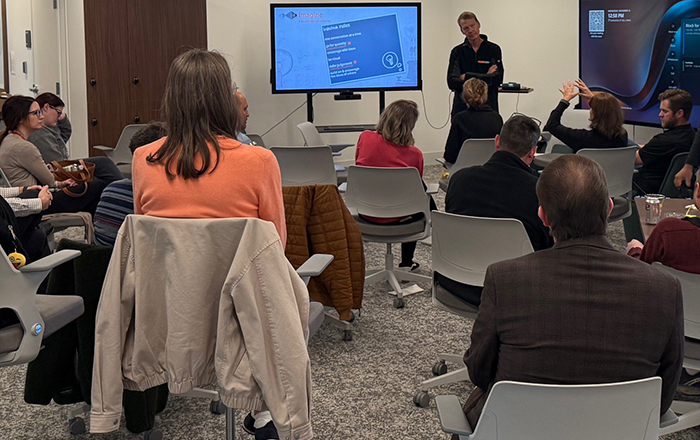
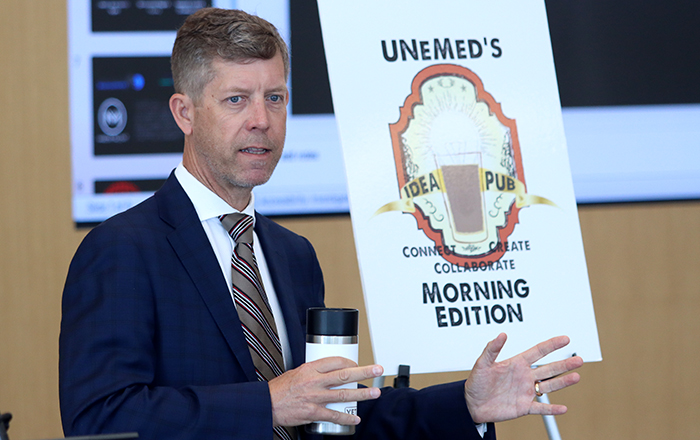
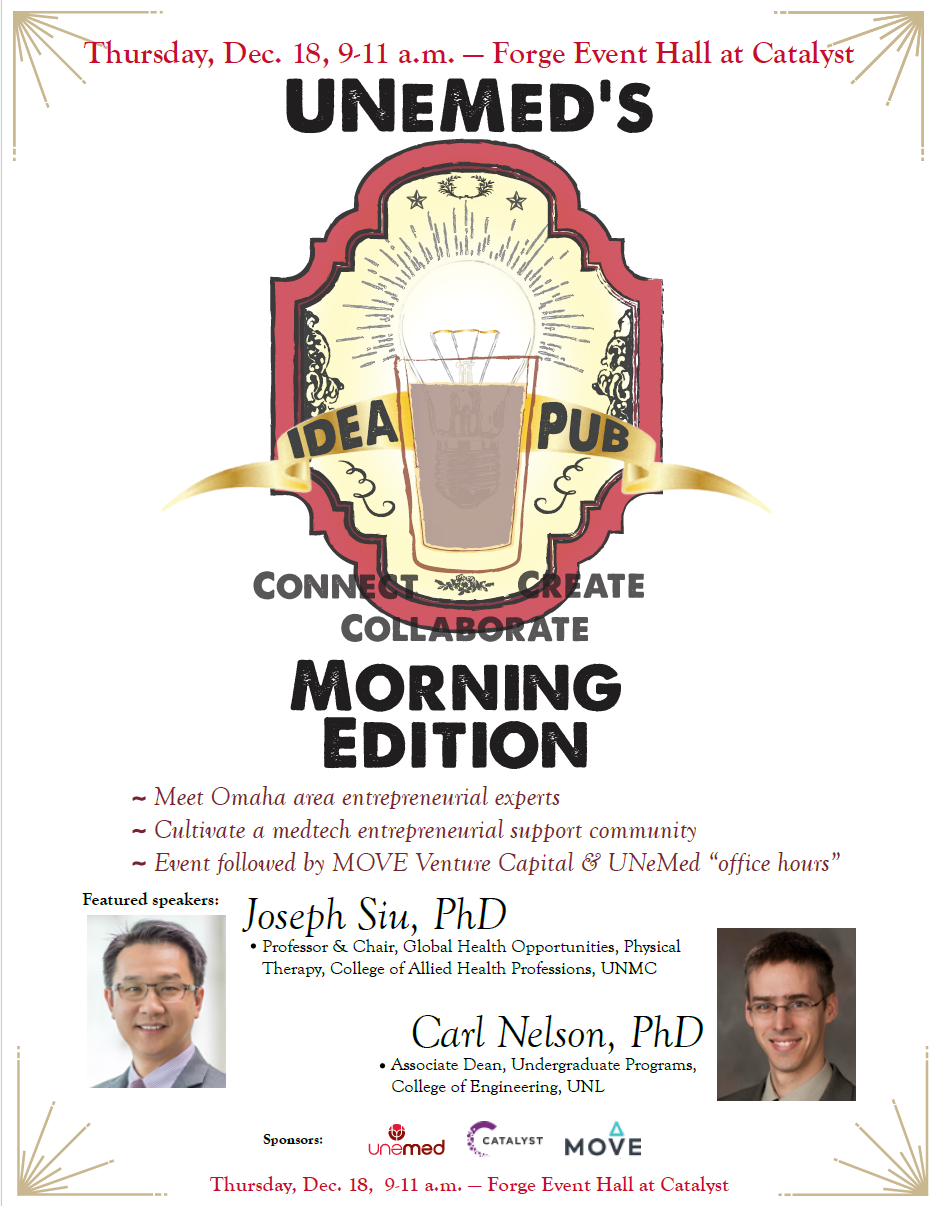
  It’s clear that the Idea Pub: Morning Edition coverage is a fixture, and we should all get used to seeing more of it. Our
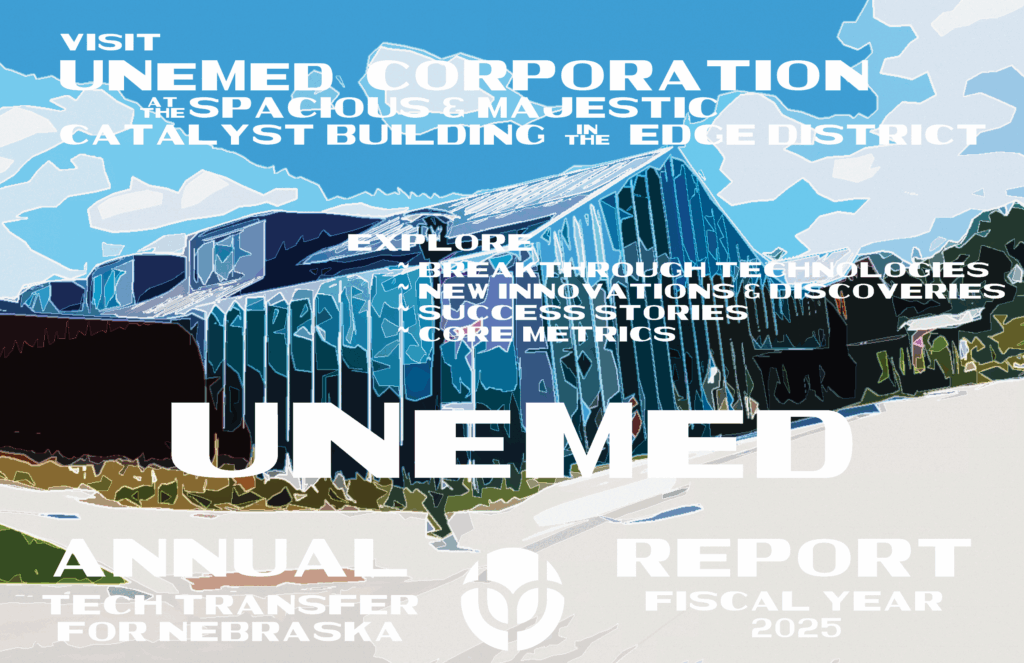
  To the shock of no one, UNeMed’s annual report is another regular feature in these annual reviews, but not usually in such rarefied air as the top three. The 2025 annual report did break from custom in size, orientation and design style, even if its reporting of core metrics and recent success stories remained constant.
 7.
7. 

 OMAHA, Nebraska (November 7, 2025)—UNeMed completed the first round of training for its new Innovation Ambassadors program, wrapping up an all-day workshop today that gave the 13-person cohort a deep dive into intellectual property, technology transfer and commercialization.